

Honorary Membership and Honorary Presidency
§4 of the asp statutes says:
(1) A Honorary membership can be applied for of persons who have made outstanding contributions to the interests of sports psychology. Previous membership in the asp is not a prerequisite for this.
(2) The General Assembly decides on admission as an honorary member based on a proposal by the Executive Committee. A 2/3 majority of the votes cast is required for admission.
(3) Honorary members have all the rights of ordinary members. There is no contribution payment.
(4) Former Vice Presidents may be appointed Honorary Presidents. Paragraphs 2 and 3 apply accordingly.

Honorary Presidents
Prof. Dr. Karl Feige
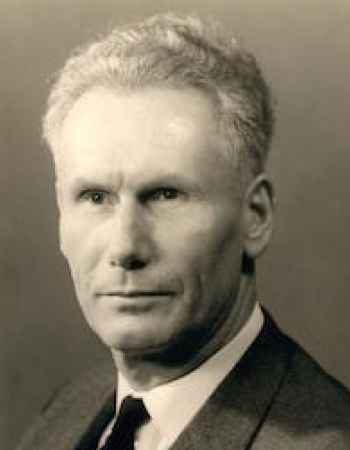
Prof. Dr. Karl Feige, born on December 6, 1905, in Berlin, passed away on September 3, 1992, in Gießen, was one of the founders of German sports psychology and the asp. From 1928 to 1931, Prof. Feige studied psychology, musicology, education, and philosophy at the University of Berlin. After completing his diploma as a physical education and sports teacher at the German University of Physical Education, he transferred to the University of Rostock. He completed his doctorate in psychology, philosophy, and education there in 1934. From 1937 to 1945, he was the director of the Institute for Physical Education in Jena. In 1946, he became the (initially provisional) head of the Institute for Physical Education at the University of Kiel. In 1965, he became the senior director at the IfL in Kiel until his retirement in 1970. Karl Feige was a co-founder of the asp and guided its affairs as chairman and honorary chairman for many years. Karl Feige passed away during the asp conference in Gießen in 1992.
Karl Feige received numerous awards and honors during his lifetime: in 1979, he was appointed honorary professor at the University of Kiel, and in 1986, he received the Federal Cross of Merit of the Federal Republic of Germany. In 1977, Prof. Karl Feige was appointed honorary president during the general assembly of the asp.
Since 1997, the asp has awarded the Karl Feige Prize every two years to deserving young researchers.
Here you can find a position paper by Karl Feige on the establishment and promotion of sports psychology and a paper on the history of sports psychology as a PDF.
Prof. Dr. Jürgen Nitsch
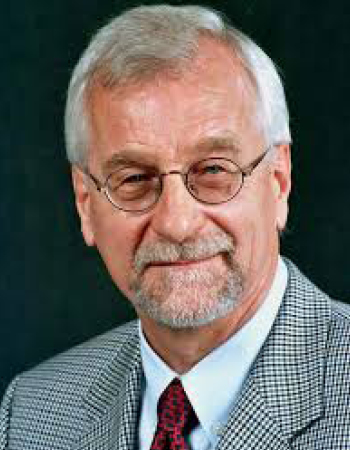
Prof. Jürgen Nitsch, born on September 23, 1940, in Königsberg, was appointed Honorary President of the asp in 2015. After studying psychology and earning his PhD at TU Berlin, Jürgen Nitsch took on the role of Professor of Psychology at the German Sport University in Cologne on a temporary basis in 1971. In 1975, he became the head (and professor) of the Psychological Institute at DSHS. From 1991 to 1995, he served as the Dean of the Faculty of Educational, Cultural, and Social Sciences at DSHS. Jürgen Nitsch retired in the fall of 2003.
Prof. Nitsch was on the board of the asp from 1977 to 1989, serving as the 1st Chairman from 1985 to 1989. He was also active internationally, being a member of the Managing Councils of the ISSP (1985-1993) and hosting various international conferences, such as the FEPSAC in 1972 and 1991 in Cologne. From 1978 to 2006, he was the editor of the book series “Betrifft: Psychologie & Sport.” Jürgen Nitsch supervised 33 doctoral and habilitation theses as the primary reviewer.
In 2015, Prof. Nitsch was elected Honorary President of the asp by the general assembly in Freiburg i. Brsg.
Here you can find the laudation by Prof. Bernd Strauß (President of the asp) for Prof. J. Nitsch from 2015 as a pdf.
Honorary Members
PD Dr. Gabi Neumann (appointed 2016)

Dr. Neumann (born 1963) earned her Master's degree in Psychology after a three-year study at the University of Oregon (1987), completed her doctorate in Psychology/Training Didactics at the DSHS Cologne in 1992, and qualified as a university lecturer in Sports Psychology at the University of Bochum in 2003. Since then, she has also been working as a lecturer there, as well as a regular speaker in the asp Curriculum for Competitive Sports since 1997. Before 2001, she was a research associate at the Institute for Sports Games at DSHS Cologne. In 2001, she took over the leadership of the Psychology department with the start of her employment at BISp (initially as a scientific advisor, later from 2005 as the scientific director) and has held this position to this day. She is currently the head of Department I 'Research and Development' at BISp and the permanent representative of the BISp director.
The asp presidency unanimously believes that Dr. Neumann has made an exceptional contribution to sports psychology and its sustainable positive development in accordance with §4 of the asp statutes, and presented the application for honorary membership to the general assembly on May 5, 2016, in Münster for a vote.
In 2016, Dr. Neumann was elected honorary member of the asp by the general assembly in Münster. At her own request, Dr. Neumann has temporarily waived the rights and obligations specified in § 4, paragraph 3 of the asp statutes.
Prof. Dr. Paul Kunath (appointed 2001)
Paul Kunath was born in 1926 in Reichenbach and began developing sports psychology at the German University of Physical Culture in Leipzig after studying psychology, general education, and didactics at the University of Leipzig and earning his doctorate in 1958 – initially as a lecturer. Just 10 years later, he was appointed as a full professor of sports psychology. This recognition acknowledged his contributions to the establishment and integration of the field, particularly through the founding of an independent institute for sports psychology and the embedding of sports psychology in academia. Paul Kunath sought scientific dialogue with other national and international representatives of science. He played a significant role in the founding of international sports psychology associations. In preparation for the first international congress on sports psychology in 1965 in Rome, Paul Kunath was invited as a sports psychology expert and, together with M. Olson and J. Recla, compiled a bibliography of approximately 1650 sources on the psychology of sports. He was also significantly involved in the establishment of FEPSAC in 1968/69 and took on leadership roles in the documentation committee as a member of the presidency. Through these initiatives, he laid the foundation for the international integration of German sports psychology. In 1983 (until 1991), he was elected president of the European Federation of Sports Psychology and was able to open the VII European Congress of Sports Psychology in Bad Blankenburg. Paul Kunath has approximately 200 publications to his name and supervised over 160 doctoral candidates and 35 habilitation candidates. The asp appointed him an honorary member in 2001. Paul Kunath passed away in March 2022.
Text source: Laudation by Henning Allmer, MV of the asp in Magglingen, 2001
Prof. Dr. Kurt Kohl (appointed 1997)
Kurt Kohl, born in 1918 in Frankfurt am Main and passed away in 2002 in the same city, completed two fields of study: initially, he pursued a teaching degree in physical education until 1939, and then - after a six-year interruption due to military service and captivity - he studied psychology, both at the University of Frankfurt. In 1955, he earned his doctorate in psychology there. His academic career took him from Frankfurt (1955-64) to Gießen (1964-66), Aachen (1966-68), and Berlin (1968-73), before arriving in Bielefeld. In 1973, he accepted a full professorship in "Physical Education and its Didactics" at the University of Education Westfalen-Lippe. In 1980, he and his team moved to the University of Bielefeld as part of the integration of the University of Education. Even after his retirement in 1984, he remained an active scholar for many years. He passed away in Frankfurt am Main in October 2002.
His dissertation published in 1956, "On the Problem of Sensory-Motor Skills," is still considered a foundational text in sports psychology. The German Association of Sports Teachers awarded him the Golden Honorary Badge, and upon the recommendation of the Conference of Ministers of Education, he was honored with a certificate for his special contributions to physical education and sports. Kurt Kohl was one of the founding fathers of the Working Group for Sports Psychology, which recognized him with honorary membership in 1997 for his contributions. Kurt Kohl passed away in October 2002.
Text and image source: dvs Mitteilungen 03_2002, Nachrichten aus der asp 4/2002 and Press release from the University of Bielefeld
Senior Lecture with the award of the Hermann Rieder Honorary Medal starting in 2022
Prof. Dr. Günter Amesberger (awarded 2026)
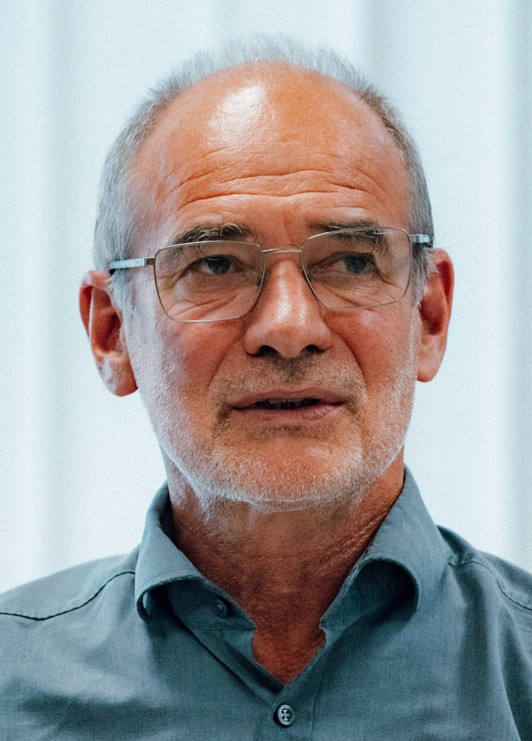
Günter Amesberger held the Chair of Sports Psychology and Sports Education at the Department of Sports and Movement Science at the University of Salzburg from 2005 to 2024.
He completed a teaching degree in Physical Education, P.P.P. (Psychology, Philosophy, and Education) with a minor in Mathematics at the University of Vienna, as well as a major in Psychology, where he earned his doctorate in 1988. This was followed by his habilitation with the Venia 'Sports Psychology' (1993) and the teaching authorization 'Sports Education' with an appointment to the University of Salzburg (Chair of Sports Education, which was expanded to include the field of Sports Psychology). He has completed further training in various psychotherapeutic schools and is a teaching therapist for biofeedback and a certified ski instructor. He is a co-founder of the ÖBS (Austrian Federal Network for Sports Psychology), which he led until 2018, the EOE (European Institute for Outdoor Adventure Education and Experiential Learning), and the ioa (integrative Outdoor Activities® Association for nature- and movement-related personal, group, and organizational development).
His research focuses included the psychology of movement, sports psychological diagnostics (three system approach), psychophysiology in sports, effects of physical activity on adults and older individuals (self-concept, vitality, fatigue, emotion, HRV, ...), accident research, psychological aspects of school sports, competency-oriented teaching and educational standards, emotions and democracy education in school sports, as well as action-oriented learning. As an applied sports psychologist, he has supported various sports (especially rowing, skiing, sailing, and football) and participated as a supervising psychologist in the Olympic Games from 1996 to 2016.
Prof. Dr. Manfred Wegner (awarded 2025)
Dear ladies and gentlemen,
dear colleagues,
and above all: dear Manfred,
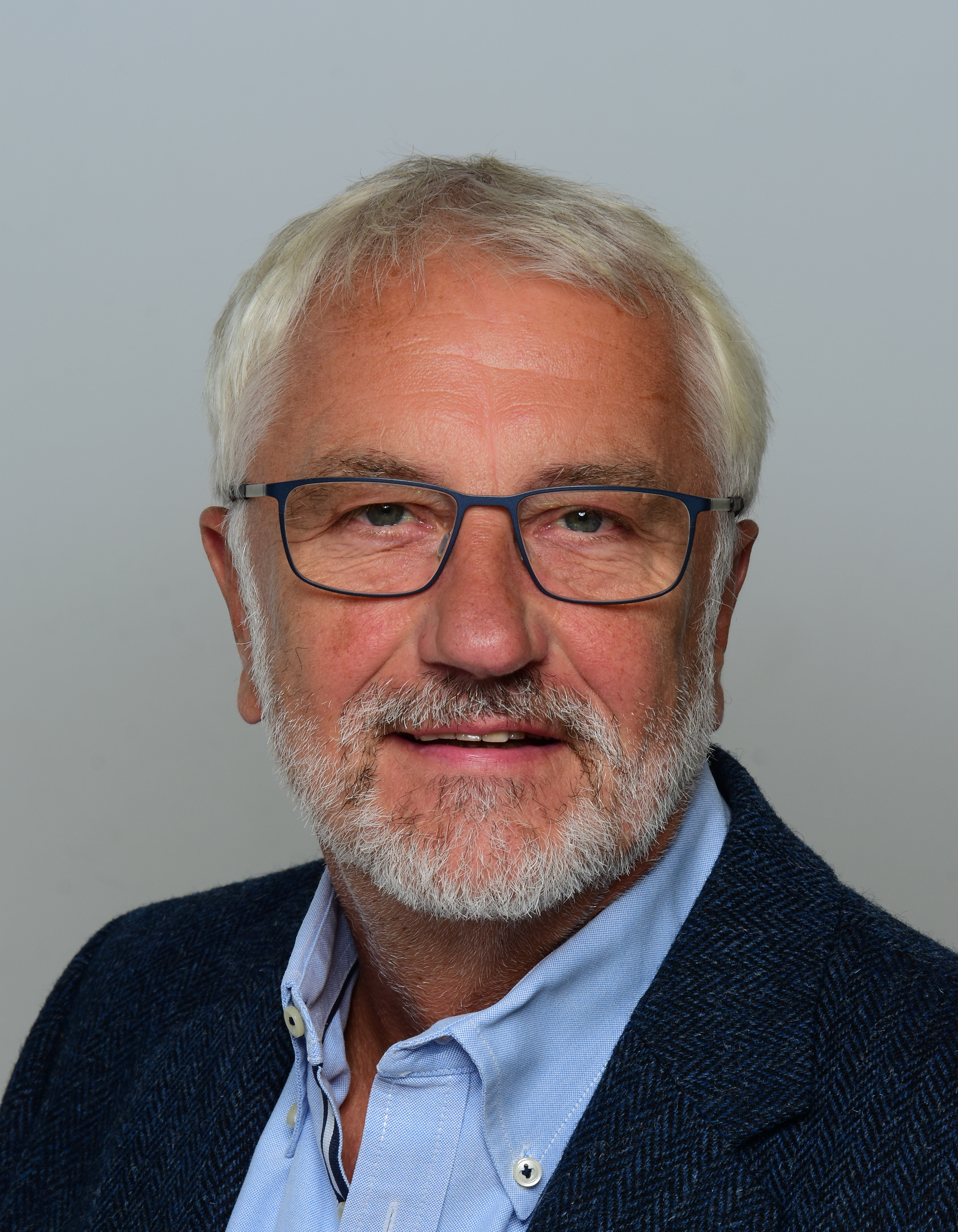
This is a special moment – and a great honor – to be able to say a few words today on the occasion of the award of the Senior Lecture to Prof. Dr. Manfred Wegner. This award is not only a sign of scientific excellence but also an expression of collegial and professional appreciation – and both, dear Manfred, you have earned in an impressive manner.
Anyone who deals with sports psychology in the German-speaking world inevitably comes across your name. And not just in bibliographies, but also – and above all – in conversations, discussions, and memories. Because you have not only published, you have shaped.
You have not only researched, you have inspired.
You have not only taught, you have accompanied, promoted, and challenged.
Your academic journey is deeply rooted in the interdisciplinary self-understanding of sports science. You have worked empirically, reflected theoretically, and contextualized socially – always with an eye for the applicability of your findings to sports psychology practice. You have never been someone who got lost in trends. You have been – and are – someone who provides guidance.
During your time in Kiel, you not only made a central contribution to the development of sports psychology in Germany but also shaped generations of young researchers. Many of them today hold responsibilities in teaching, research, and consulting – and not a few still call you “their doctoral supervisor,” mentor, or simply: role model.
Dear Manfred, the Working Group for Sports Psychology is not simply honoring a distinguished scientist today – it is honoring one of the defining figures of our field. And it does so with a lecture that rightly bears the name “Senior” – but not because you are withdrawing, rather because you speak with the weight of experience, wisdom, and reflection.
In your thinking – clear, concise, often with a subtle ironic undertone – there is a passion that is contagious. Anyone who has experienced you at an asp conference knows this: Your contributions are analytical, well-founded, sometimes uncomfortable – but never unproductive. You get to the point without ever sacrificing complexity. And that is an art.
On behalf of the professional community, I thank you – for your decades of commitment, for your intellectual fearlessness, for your human warmth. Today's lecture is not a farewell – it is a tribute. And we look forward to continuing to think, discuss, debate – and laugh – with you.
Congratulations on the Senior Lecture, dear Manfred – and thank you for everything you have done for sports psychology. And for what you will continue to do.
Prof. Dr. Oliver Stoll, asp President 2021-2025
Prof. Dr. Hans Eberspächer (posthumously awarded 2024)
Hans Eberspächer has engaged and fascinated people, helping to shape sports psychology into what it is today. Athletes, coaches, students, as well as colleagues and other listeners, were inspired by him like no one else in the field of sports psychology. He succeeded in conveying complex relationships in a way that made them understandable and actionable. With this approach, he was able to attract people to his field and provide them with lasting insights that accompany them throughout their lives. He managed to establish applied sports psychology in Germany as a recognized component of athlete and team support.
Hans Eberspächer was born on April 15, 1943, in Stuttgart. He studied in Cologne, graduating as a Diplom-Sportlehrer from the German Sports University and as a Diplom-Psychologe from the University of Cologne. He earned his doctorate there in 1971 from the Faculty of Mathematics and Natural Sciences. This was followed by his habilitation and a call to become a professor at the University of Frankfurt. In 1978, he received an appointment at Ruprecht-Karls-University Heidelberg, where he served as a professor of sports psychology at the Institute for Sports and Sports Science until 2007.
His scientific interests focused on the areas of 'stress and strain', 'load' and 'recovery', 'cognitive skill training', and particularly mental training. The application of mental training outside of sports, in fields where successful performance under pressure is required (e.g., aviation, surgery, etc.), is particularly attributed to the influence of Hans Eberspächer. His scientific work resulted in countless publications. Works that were not only written for the scientifically interested reader received particularly great resonance.
Books such as 'Mental Training' (Copress-Verlag), 'Resource I' (Hanser-Verlag), or 'Being Good When It Matters' (Hanser-Verlag) stand out for making sports psychological techniques and content accessible to a broad readership. His 1982 published standard work 'Sports Psychology' (Rowohlt-Verlag) became the most read book in the field.
He remained an active athlete until the end, having been a competitive sportsman in athletics, handball, and boxing during his early years. He was particularly passionate about motorcycling, where he was considered an icon of the scene. With his last book 'Motorcycling – Mentally Trained' (Motorbuch-Verlag), he leaves behind a practical standard work for motorsport enthusiasts.
Hans Eberspächer was actively involved in significant committees, including being a founding member and board member of the German Association for Sports Science e.V. (dvs) from 1977 to 1985, and a member of the Working Group for Sports Psychology in Germany e.V. (asp) from 1985 to 1989.
Hans Eberspächer is regarded as the pioneer of practical sports psychology in Germany. He personally provided sports psychological support to several national teams and was accredited at multiple Olympic Games.
Moreover, he significantly contributed over decades to the acceptance of scientifically based, applied sports psychology as an integral part of competitive sports by clubs, associations, and the interested public, which is now routinely sought after. Not least, the initiation of the Central Coordination Sports Psychology (ZKS) of the German Olympic Sports Confederation (DOSB) in 2003 is a key element in establishing sports psychology as an institution, closely associated with the name Hans Eberspächer. Not only athletes and coaches but also numerous sports psychologists active in competitive sports have benefited from his work and thinking, continuing to do so beyond his passing.
Hans Eberspächer is missed – yet gratitude and memories of this extraordinary person prevail. His thoughts, humor, and unique manner remain in our memories, and we are filled with joy to have experienced him.
Hans-Dieter Hermann and Jan Mayer
Prof. Dr. Bernd Strauß (awarded 2023)
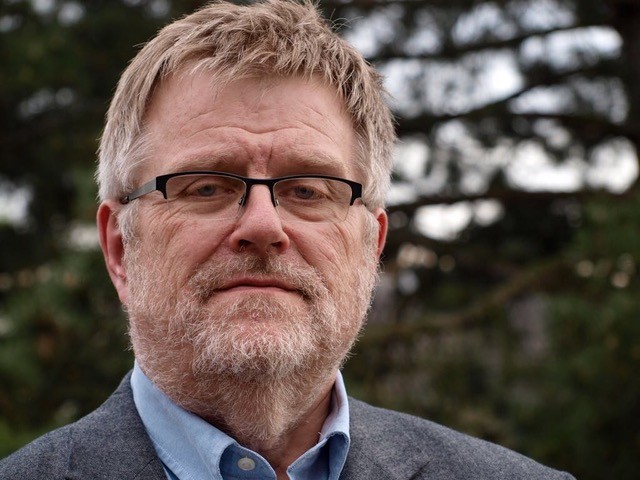
Prof. Dr. Bernd Strauß studied psychology at the Christian-Albrechts-University in Kiel from 1979 to 1987 and then worked as a research assistant at the Institute for Sports and Sports Science. In 1987, he obtained his diploma and in 1992, he earned his doctorate (thesis: "Confounding Factors in Complex Problem Solving"). In 1998, Strauß completed his habilitation under Herbert Haag (topic: "The Influence of Sports Spectators on Athletic Performance").
In 1998, Strauß took up a professorship in sports psychology at the Westfälische Wilhelms-University (WWU) in Münster. From 2001 to 2006 and from 2008 to 2010, he served as the dean of the Department of Psychology and Sports Science. In 2009, he was also appointed as the representative for elite sports at WWU.
In the spring and summer of 2011, Strauß was a visiting professor at the University of Vienna and in February 2015 at Swinburne University in Melbourne, Australia.
From 2003 to 2009, Strauß was the chairman of the German Association for Sports Science (dvs) and was awarded the Golden Honorary Badge of the DVS in 2012. In September 2019, Strauß was appointed an honorary member of the dvs.
In May 2013, he was elected president of the Working Group for Sports Psychology in Germany and was re-elected in 2015 and 2017. He remained in office until 2021. Overall, Bernd Strauß worked for 14 years in various positions and offices in the presidencies of the asp. The asp conferences in 2002, 2006, and 2016, as well as the FEPSAC conference in 2019, which took place under his leadership, are unforgettable.
From 2001 to 2004, Strauß served as the managing editor of the Journal of Sports Psychology (now JASEP).
His research focuses on areas such as expertise in sports, social psychological aspects of sports, and research methods. Additionally, he dealt with the relationships between sports and media, sports reporting, and the topic of sports spectators.
Personally, I got to know Bernd Strauß through our work in several boards and presidencies of the asp. In this context, I have come to appreciate his very structured and foresight-driven approach. Thank you for that and also for your friendship.
Oliver Stoll
Prof. Dr. Ulrike Ungerer-Röhrich (awarded 2022)
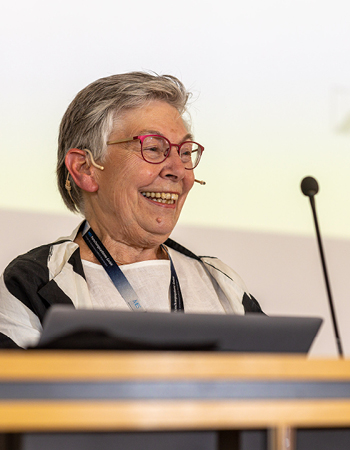
Prof. Dr. Ulrike Ungerer-Röhrich (awarded 2022)
For her outstanding contributions to the development of sports psychology, the asp presidency awards the Hermann Rieder Honorary Pin of the asp 2022 to Prof. Dr. Ulrike Ungerer-Röhrich during the 54th asp conference in Münster.
She studied sports, mathematics, and education in Mainz (Diploma in Physical Education 1971) and psychology in Marburg (Diploma in Psychology 1976). Over several years, she qualified in child therapy, dance and movement therapy, psychodrama, and systemic therapy.
Prof. Dr. Hermann Rieder († 2009) namesake of the honorary badge of the asp
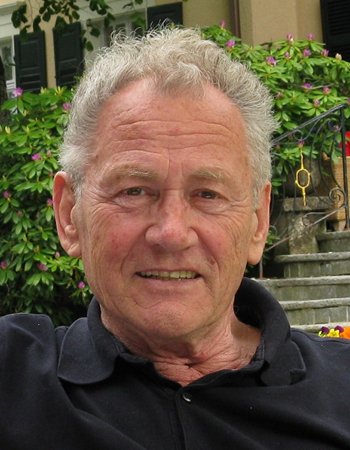
Prof. Dr. Hermann Rieder
On May 30, 2019, during the asp Annual Conference 2019 in Halle (Saale), as part of the ceremony "50 Years of asp", the Golden Honorary Badge of the asp was named after Prof. Hermann Rieder. asp President Bernd Strauß posthumously honored Rieder's significant contributions during the founding years of the asp. The certificate was received by his wife, Ulrike Rieder.
Rieder was one of the founding members of the asp in 1969 and played a crucial role in the early years in shaping the institutional representation of sports psychology in Germany. From 1971 to 1985, Rieder also served as the 1st Chairman of the asp, and in 1970 he became the founding director of the BISp, as well as the General Secretary of the ISSP from 1973 to 1995.
From 1968 to 1994, Prof. Dr. Hermann Rieder led the Institute for Sport and Sport Science at Heidelberg University (formerly the Institute for Physical Education).
Photo rights: Ulrike Rieder
Hermann Rieder Honorary Medal until 2021
Prof. Dr. Jörn Munzert (awarded 2021)

On May 14, 2021, Prof. Dr. Jörn Munzert was awarded the Herrmann Rieder Honorary Medal by the asp during the virtual asp annual conference in Tübingen. asp President Bernd Strauss recognized Munzert's significant contributions to sports psychology.
After studying psychology in Berlin, he worked as a research assistant at the Institute for Human Sciences at TU Berlin. Jörn Munzert earned his doctorate in psychology and then took a position as a research assistant at the Institute of Psychology at the German Sport University Cologne. He habilitated in psychology with a focus on movement science and represented the chair at the University of Bielefeld for the area of "Movement and Motor Skills".
From 1996 to 2000: Professorship in Sports Science with a focus on Sports Psychology at the University of Giessen
Since the winter semester of 2000: Professorship in Sports Science with a focus on Sports Psychology and Movement Science at the University of Giessen
Team Salzburg Günter Amesberger, Thomas Finkenzeller, and Sabine Würth (as well as everyone who helped, awarded in 2020)
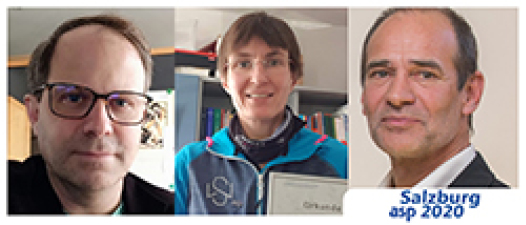
The organizers of the first virtual and 52nd asp conference in May 2020 in Salzburg (Sabine Würth, Günter Amesberger, Thomas Finkenzeller, and everyone who contributed) were honored for their exceptional achievements and professional organization as TEAM SALZBURG with the asp Honorary Award, the Hermann Rieder Honorary Pin. In just three months, an event in digital format (the first in sports science) was realized, with several hundred sports psychologists actively participating.
Prof. Dr. Dr. h.c. Klaus Willimczik (awarded 2020)
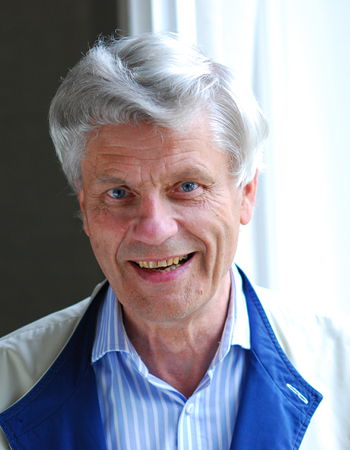
On May 22, 2020, Prof. Klaus Willimczik was awarded the Herrmann Rieder Honorary Medal of the asp during the virtual asp Annual Conference 2020 in Salzburg. asp Vice President Claudia Voelcker-Rehage honored Willimczik's significant contributions to sports psychology on behalf of asp President Bernd Strauß.From 1980 until his retirement in 2005, Klaus Willimczik led the department of 'Sports and Movement' at the University of Bielefeld. After studying philosophy, history, geography, and physical education in Mainz, Hamburg, and Berlin, where he completed his first state examination and doctorate (in Mainz) as well as his habilitation with the Venia Legendi for 'Theory of Physical Education' (in Frankfurt), he was appointed as a full professor of sports science at TH Darmstadt in 1971 at the age of 31.The laudation by Prof. Strauß, read by Prof. Voelcker-Rehage, can be found here as a PDF for download.
Prof. Dr. Meinhart Volkamer (awarded 2019)
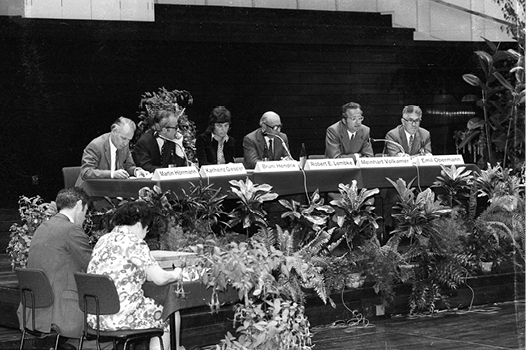
Prof. Dr. Meinhart Volkamer
On May 30, 2019, Prof. Meinhart Volkamer was awarded the Herrmann Rieder Honorary Pin of the asp during the festive event "50 Years of asp" at the asp Annual Conference 2019 in Halle (Saale). asp President Bernd Strauß recognized Volkamer's significant contributions during the founding years of the asp. Volkamer was one of the seven founding members of the asp alongside Rieder, Gabler, Hahn, Feige, Jonas, and Röthig.
Volkamer served as a professor in the Department of Educational and Cultural Sciences at the University of Osnabrück from 1969 until his retirement in 2001. He passed the First and Second State Examinations in the subjects of Sports and German and is also a licensed psychologist; he earned his doctorate in this field. Initially, he was a psychologically-minded educator, but later became an educator with a psychological perspective, critically and constructively accompanying the development of sports education in theory and practice through many lectures and articles.
Source: Volkamer, M. (2003). Sportpädagogisches Kaleidoskop. Cwalina.
Prof. Dr. Hubert Ilg (awarded 2019)
Prof. Dr. Hubert Ilg
On May 30, 2019, Prof. Hubert Ilg was awarded the Herrmann Rieder Honorary Medal of the asp during the festive event "50 Years of asp" at the asp Annual Conference 2019 in Halle (Saale). asp President Bernd Strauß recognized Ilg's significant contributions to sports psychology in both East and West Germany, as well as during the reunification.
Prof. Dr. Gerd Konzag (awarded 2019)
Prof. Dr. Gerd Konzag
On May 30, 2019, Prof. Gerd Konzag was awarded the Herrmann Rieder Honorary Medal of the asp during the festive event "50 Years of asp" at the asp Annual Conference 2019 in Halle (Saale). asp President Bernd Strauß recognized Konzag's significant contributions to sports psychology in both East and West Germany, as well as during the reunification.
After completing his studies in Berlin, Konzag worked as a lecturer and later as a professor of sports psychology at Martin Luther University Halle (Saale) starting in 1954. From 1993 to 1995, Gerd Konzag served as the second chairman of the Working Group for Sports Psychology.
Prof. Dr. Jürgen Beckmann (awarded 2019)
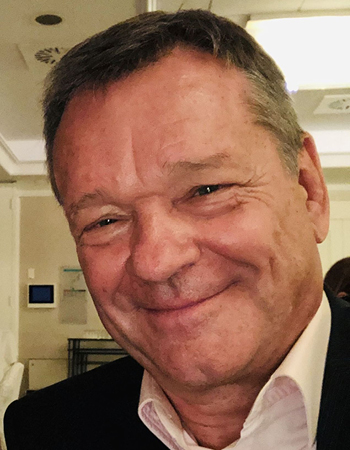
Prof. Dr. Jürgen BeckmannOn May 30, 2019, Prof. Jürgen Beckmann was awarded the Golden Honorary Badge of the asp during the asp Annual Conference 2019 in Halle (Saale) following his Senior Lecture "From Scientifically Reflected to Scientifically Justified Sports Psychology Practice." asp President Bernd Strauß recognized Beckmann's significant contributions to the asp and sports psychology in Germany.
After studying social sciences with a focus on psychology at Ruhr University Bochum (1981), he earned his doctorate (1984) and habilitation (1988) at the University of Mannheim in psychology (Venia Legendi for psychology; additionally Dr. habil. LMU in 1992). From 1984, he was a project leader at the Max Planck Institute for Psychological Research in Munich. In 1990, he received a Heisenberg Fellowship from the DFG and worked at Florida Atlantic University during this time in 1993.
Prof. Dr. Anne-Marie Elbe (awarded 2019)
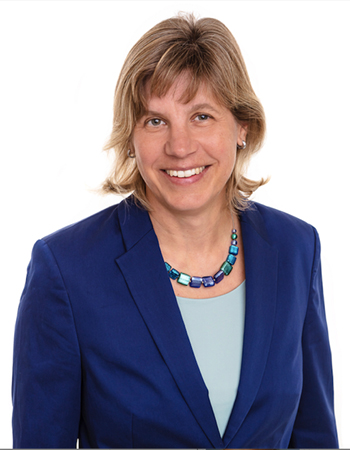
Prof. Dr. Anne-Marie Elbe
On May 30, 2019, Prof. Anne-Marie Elbe was awarded the Golden Honorary Badge of the asp during the asp Annual Conference 2019 in Halle (Saale) following her Senior Lecture "50 Years of asp from a European Perspective." asp President Bernd Strauß recognized Elbe's significant contributions to sports psychology in Germany and particularly in Europe. At the time of the award, Anne-Marie Elbe was the President of FEPSAC.
Anne-Marie Elbe has been a Professor of Sports Psychology at the University of Leipzig since 2018. Previously, she was a Professor of Sports and Exercise Psychology at the University of Copenhagen, Denmark, as well as at Northumbria University, Newcastle in the UK, and at the University of Potsdam.
Her publications and research interests focus on motivational and volitional aspects of athletic performance, talent development in sports, doping prevention, and the integrative role of sports.
She is a Past President of FEPSAC (European Federation of Sport Psychology), a member of the Scientific Board of ECSS (European College of Sport Science), Associate Editor for the journal Science and Medicine in Football, and a member of the Editorial Board of Psychology of Sport and Exercise.
Prof. Dr. Willi Essing (awarded 2019)
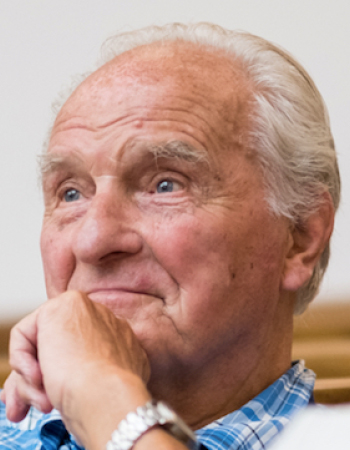
Prof. Dr. Willi EssingOn May 30, 2019, Prof. Willi Essing was awarded the Golden Honorary Badge of the asp during the festive event "50 Years of asp" at the asp Annual Conference 2019 in Halle (Saale). asp President Bernd Strauß recognized Essing's significant contributions during the founding years of the asp.
Prof. Dr. Hartmut Gabler (awarded 2018)
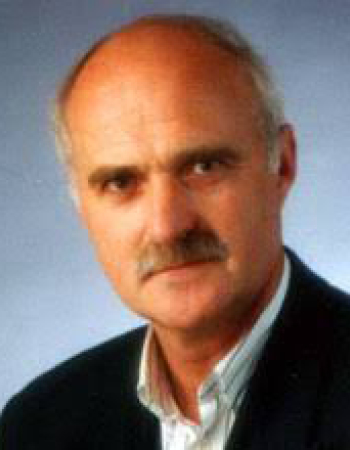
Prof. Dr. Hartmut Gabler
On May 11, 2018, Prof. Hartmut Gabler, who held the Chair of Sports Psychology at the University of Tübingen until his retirement, was awarded the Golden Honorary Badge of the asp during the asp Annual Conference 2018 in Cologne. asp President Bernd Strauß recognized Gabler's significant contributions to sports psychology in Germany. Among other things, Hartmut Gabler was one of the founding members of the asp at the founding meeting in Münster in 1969.
In 1959, Hartmut Gabler began studying English, French, and Physical Education at the University of Tübingen. From 1961 to 1963, he studied at the German Sport University Cologne, graduating as a Diplom-Sportlehrer. He then started studying psychology in Cologne in 1963, which he continued in Tübingen in 1965. After graduating as a Diplom-Psychologe at the Eberhard Karls University of Tübingen in 1968, he began his long professional career at the University of Tübingen. After earning his doctorate (Dr. phil.) in the field of Social and Behavioral Sciences, Education in 1971, Hartmut Gabler became the Managing Director of the Institute for Sports Science in 1972.
In 1976, Gabler qualified as a professor in Sports Science and took over the chair in Sports Science with a focus on Sports Psychology at the University of Tübingen in 1977. He held this position until his retirement in 2005. In the meantime, he served twice as Dean of the Faculty of Social and Behavioral Sciences for two years each and was Pro-Rector of the University from 1997 to 1999. Shortly before his retirement (1999-2002), he once again took over the management of the Institute for Sports Science.
Throughout his career, which significantly shaped the development of sports psychology in Germany, Gabler's main areas of focus were performance motivation in elite sports, motivational foundations of extreme sports participation, motivation for fair play, aggressive behaviors of athletes and spectators, life courses and biographies of high-performance and extreme athletes, as well as psychological training.
In addition to his scientific insights and contributions to theory formation, Hartmut Gabler was also active in the practice of sports psychology. He dealt with psychological aspects in various sports, such as swimming and football, and then increasingly focused on tennis. Here, he developed teaching and learning materials for teacher and coach training in collaboration with the German Tennis Federation and also created training concepts.
Prof. Dr. Roland Seiler (awarded 2018)
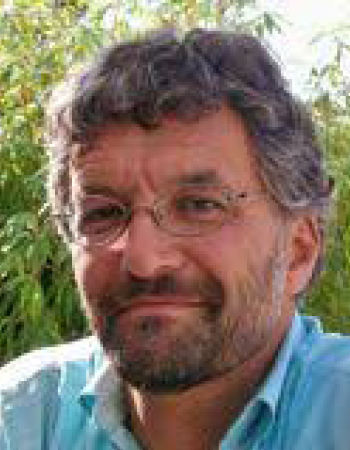
Prof. Dr. Roland Seiler
On May 11, 2018, a Senior Lecture by Prof. Roland Seiler from the University of Bern (CH) took place at the German Sport University Cologne. Following this, Roland Seiler was awarded the Golden Honorary Badge of the asp by asp President Bernd Strauß. Bernd Strauß acknowledged Roland Seiler's international and national contributions to sports psychology.
Roland Seiler obtained his teaching diploma in Physical Education and Sports II at the University of Bern and earned his doctorate in Psychology and Sports Medicine at the German Sport University Cologne in 1989. After his habilitation in 1994 at DSHS Cologne, he held a professorship at the Norwegian School of Sport Sciences in Oslo, declined an offer to Gießen, and took over the leadership of the Sports Psychology and Social Sciences department at the Federal Office of Sports in Magglingen in 1996. In 2005, he accepted a professorship focused on sports psychology at the Institute of Sports Science at the University of Bern and is currently the Deputy Director of the Institute.
Prof. Seiler was the head of the organizing committee for the FEPSAC Congress in 1991 in Cologne and was elected to the board of FEPSAC there, which he presided over from 2003 to 2007. He also led the asp conference in 2001 in Magglingen and the FEPSAC Congress in 2015 in Bern.
His research focuses on the cognitive organization of sports actions, particularly within groups and teams. He also pays special attention to the development and assurance of quality in Applied Sports Psychology, among other things, by designing and leading a postgraduate program in Sports Psychology.
Prof. Dr. Dorothee Alfermann (awarded 2016)

Prof. Dr. Dorothee Alfermann
On June 21, 2016, the farewell symposium for Prof. Dr. Dorothee Alfermann took place at the Faculty of Sports Science at the University of Leipzig, as she will be leaving the university service after the summer semester of 2016. Numerous guests attended the symposium. asp President Bernd Strauß delivered the laudation. Additionally, Prof. Dr. Anne-Marie Elbe (President of FEPSAC) and Prof. Dr. Dr. hc. mult. Ursula Lehr (University of Heidelberg, former Federal Minister) spoke, among other things, about issues of career development in old age. Bernd Strauß highlighted the outstanding contributions of the Ema-Geron Award winner to the development of sports psychology and awarded Prof. Alfermann the Golden Honorary Badge of asp.
Dorothee Alfermann is the first recipient of the Golden Honorary Badge of asp. The asp presidency decided in June 2016 to introduce this new form of recognition for asp. The prerequisite for this honor is a resolution by the asp presidency. The Golden Honorary Badge of asp is an additional instrument of asp, alongside the already established instruments of honorary presidency and honorary membership, which are awarded by resolution of the general assembly.
Here you can find the laudation by asp President Prof. Bernd Strauß as a pdf for download.
Prof. Dr. Dieter Hackfort (awarded 2016)
Prof. Dr. Dieter Hackfort
On November 19, 2016, a ceremony was held at the University of the Federal Armed Forces in Munich to celebrate the 25th anniversary of the Department of Sports Science and in honor of its founder, Prof. Dr. Dieter Hackfort, who celebrated his 65th birthday the following day. In this context, asp President Prof. Bernd Strauß awarded the Golden Honorary Badge of asp to the jubilarian.
Prof. Hackfort is the founding professor of the Department of Sports Science (DfS, formerly ISWS=Institute for Sports Science and Sports) established in 1991 at the University of the Federal Armed Forces Munich. He received his education at the German Sport University and the University of Cologne, where he studied Sports Science, Psychology, and Education. He earned his doctorate in 1983 (with distinction) and his habilitation in 1985. His professional career took him from Cologne (Assistant at the Psychological Institute of the German Sport University) to Tampa, Florida (Visiting Professor at the Center for Behavioral Medicine and Health Psychology at the University of South Florida), Heidelberg (Professor of Sports Science), and Munich (Professor of Sports Psychology and Sports Education) before moving to Doha, Qatar, in 2003, where he was involved as Dean in the founding of Aspire – Academy for Sports Excellence and led the Department for Quality Management, Education and Social Affairs (QESA) as Director, and established the Sports Science Program at Qatar University as Founding Director. After declining an offer from the German Sport University Cologne, he returned to the University of the Federal Armed Forces Munich in 2010.
His research focuses on the development of a mental testing and training system (MTTS), performance management in stressful situations, transitions in high-performance sports during athletic careers and into post-sport careers, as well as the diagnostics and optimization of mental fitness.
Here you can find the laudation by asp President Prof. Bernd Strauß as a PDF for download.